Audio Chain Reviews from a Systems‑Thinking Audiophile
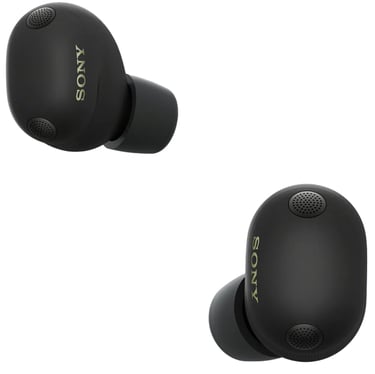
Sony WF-1000XM6
Sony Nailed the Features, Not the Physics
May 10th, 2026
TL;DR: Excellent all‑rounder with polished touch controls and genuinely enjoyable sound, but ANC falls well short of Sony’s own hype and can’t touch a good over‑ear.
I am frankly mildly disappointed with the XM6’s ANC. However, a large part of that is Sony’s own fault and their somewhat exaggerated marketing push around its noise‑cancelling capabilities. I went in fully aware that ANC in IEM form is structurally limited compared to full‑size over‑ears, but Sony’s XM6 fanfare stepped around that reality just enough to nudge expectations a bit higher than the physics really justify.
That said, ANC was never my primary reason for buying these. I have owned two sets of the older XM4s since their release and bought them primarily for their on‑ear controls in a lab setting. Coming from the Bose SoundSport Free’s physical button controls, the XM4s were my first true wireless set where touch gestures felt precise and practical enough that I could leave my phone tucked-away on the bench and run most interactions from my ears. By that time, other brands had their own takes on touch or stem‑squeeze controls, but Sony’s implementation plus app support made it feel like a complete system instead of a gimmick.
To be transparent, over the past couple of years I had actually transitioned to newer open‑ear designs for lab use, particularly the CLEER Arc series for their own touch controls. But when Sony rolled out the XM6 generation with full marketing trumpets (and a temporary sale), I decided to revisit the platform. Three weeks in, including very intensive daily and nightly use during an out‑of‑state week‑long trip, I stand by “mildly disappointed with the ANC” as the fairest summary.
First, although I am indeed an “audiophile,” the XM6 was never intended to be part of my reference chain. Even so, I have to admit I was pleasantly surprised by its musicality. The moment I finished setting up the app and started my first track, I could hear that Sony’s classic tuning had shifted. Not necessarily worse or better… just different. Sony completely reworked the driver and internal architecture in this generation to pair with their updated DSP/“AI” platform, and to my ears the tonality lands in a kind of gray middle: neither warm, nor particularly airy, nor flat, just a carefully smoothed consumer‑grade neutrality meant to keep as many people as possible in the comfort zone.
There is another important caveat: your source chain matters more than many people will give it credit for in a product like this. Paired with a typical non‑Apple phone, you are probably going to be living in AAC or similar, and even on iOS you are giving the Sony DSP a higher noise floor and more generalized system jitter to contend with. On my Samsung Galaxy Z Fold 6 the sound was “fine” and entirely serviceable for casual listening. When I paired the XM6 with my FiiO M27 flagship DAP, however, the sound quality demonstrably improved; proper LDAC, a cleaner floor, and a higher‑resolution signal into Sony’s processing makes a real and audible difference. Every link in the chain still matters when the downstream hardware has the headroom to show it.
Sony’s “Background Music” feature, on the other hand, is frankly marvelous. That Café setting is so reminiscent of an open‑back headphone presentation that my XM6 listening lives there most of the time; the sense of space and environmental blend feels far more natural than classic “full isolation” ANC. The tradeoff is that this mode also reduces passive isolation, and the active cancellation cannot fully make up the difference.
I am using Comply memory foam tips, which buy a bit more passive isolation than stock silicone. Even so, compared to a full‑size over‑ear ANC setup, the XM6’s cancellation is, in my experience, anemic. It is sufficient to dim the voice of someone sitting right next to me, but only dim. I still hear that something was said that, in fairness, is arguably useful. I hear the murmur, tap pause, tap aware, ask them to repeat, discover it was inane small talk, respond politely, then tap Noise Cancellation, tap play, and return to Vivaldi.
The real primary reason I hit that purchase button, the thing almost no one seems to talk about in the major reviews, a feature I was genuinely keen to explore and, to my own chagrin, still have not meaningfully tested: the integrated, native Gemini access.
Sony worked with Google so these can speak directly to Gemini on Android, with wake‑word and multimodal context access designed to make live interaction more seamless and fluid. I set up the Gemini app on my phone, even installed it on my PC, and briefly toyed with the idea of using the XM6 as a kind of desktop voice interface. And then, somehow, I never actually got around to doing anything real with it.
Part of that is simply that I am a primary Perplexity user when it comes to serious research. I use Gemini for lighter topics: cooking ideas, product review aggregation and suggestions, general background information, the sort of things that benefit from wide, multi‑faceted web sweeps. However, most of my on‑the‑go AI use happens through Perplexity’s own voice on my phone. At home, I do use Gemini, but I never quite hit a convenience threshold where I was going to put the XM6 in just to talk to it. The option is still there, and perhaps one day I will actually lean into it, yet for now I understand why this aspect never became a headline feature in reviews. The usage pattern just is not quite there to make it a game changer. Yet.
All in all, I cannot give the WF‑1000XM6 more than four stars. Sony pushed my expectations further than they ought to have gone regarding ANC capability, and that week‑long trip was full of (again) mild disappointment on that front. They also will not be coming back into the lab with me; I still hold that the newer open‑ear designs are better suited there, and their audio quality in that open configuration has greatly moved forward. Nevertheless, the XM6’s ANC does bring a bit more focus to a pleasantly musical presentation that is further enhanced by the Café setting. And they are very nice for WebEx conferences when you actually want to hear what is being said over moderate local noise.
For final full transparency: for ANC (and my sleep disorder), I also purchased the Bose QuietComfort Ultra 2nd Gen, timing it so they would arrive the day I got back from my trip. It is a bit apples‑to‑oranges, because now we are talking full‑size over‑ear cans (with Comply pads there as well), but when I really need isolation over portability (big case in a bag versus a tiny case in a shirt pocket), it is the Bose QC Ultra 2 that I reach for.
So honestly, I think that is the main pivot for most people: a truly pocketable case that can charge either by cable or wirelessly (Qi/MagSafe) but with only moderate ANC, versus a larger headset that demands wired recharging but delivers far stronger cancellation. The Sony sound is good, the app functional, the various modes range from “whatever” (Endel and friends) to excellent (Background Music), the battery life is strong, and the packaging is laughably minimal in a way that really has to be experienced rather than described.